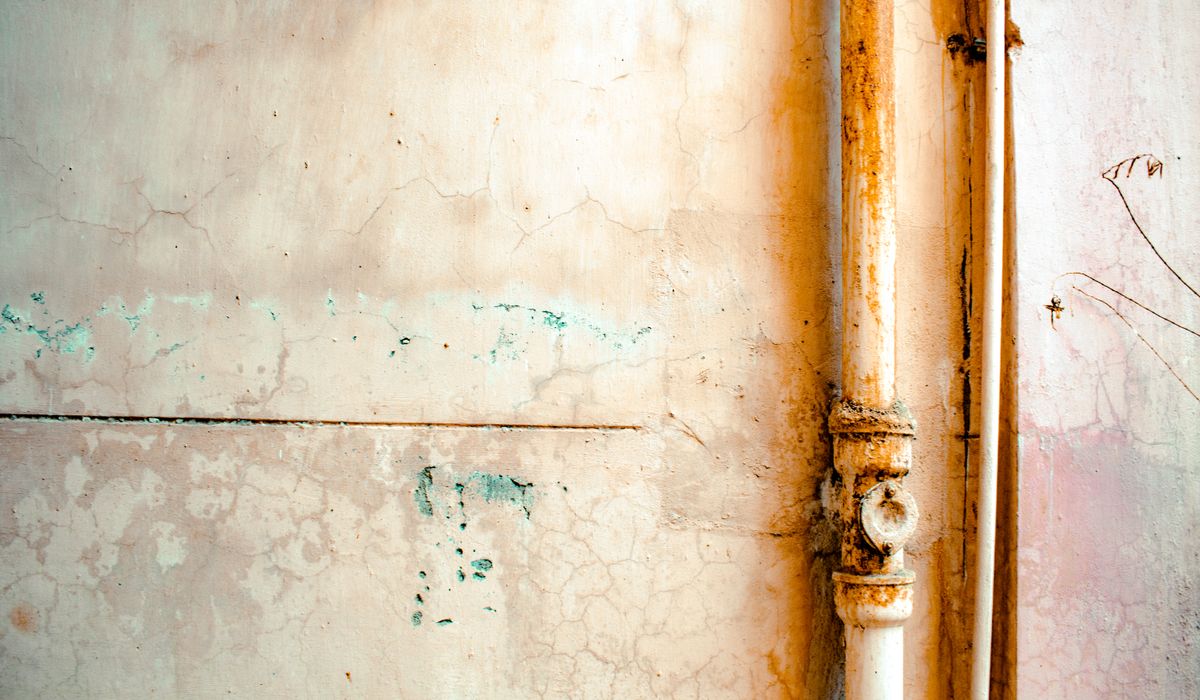
A pipeline is designed to last for decades — yet failures, leaks, and bursts happen far too often, usually long before a pipe's rated life. Understanding why pipes fail is the first step to specifying, installing, and maintaining systems that don't. Almost every failure traces back to a small number of root causes, and almost all of them are preventable.
This guide breaks down the main modes of pipe failure — corrosion, bursting, water hammer, joint failure, and material fatigue — and the practical prevention measures for each. At HS Infraproc, we help engineers select the right material and protection, from HDPE and DI pipes to external pipe coatings, to avoid exactly these failures.
The Five Most Common Causes of Pipe Failure
1. Corrosion
The leading cause of failure in metal pipes. Internal corrosion from aggressive water chemistry and external corrosion from soil and moisture thin the wall until it perforates or weakens. Galvanic and microbial corrosion accelerate the process.
2. Bursting & Over-Pressure
When internal pressure exceeds the pipe's rated capacity — through an under-specified pressure class, a pump surge, or a blocked line — the wall ruptures. Freezing water expansion and external crushing loads cause similar bursts.
3. Water Hammer (Surge)
Sudden valve closure or pump trip sends a pressure shock wave through the line. Repeated surges fatigue joints and fittings and can spike pressure far above the steady-state design value.
4. Joint & Installation Failure
Most leaks occur at joints, not in the pipe body. Poor solvent welding, bad fusion, missing bedding, point loads, or backfill with sharp rock all create early failure points.
5. Material Fatigue & UV / Thermal Damage
Plastics left exposed to UV become brittle; repeated thermal expansion and contraction stress joints; ageing and wrong material selection reduce the pipe's effective life.
How Corrosion Actually Destroys a Pipe
Because corrosion is the single biggest killer of metal pipelines, it is worth understanding the common forms:
- Uniform corrosion — general wall thinning across the surface.
- Pitting corrosion — localized deep pits that perforate the wall quickly.
- Galvanic corrosion — dissimilar metals in contact set up an electrochemical cell.
- Microbiologically influenced corrosion (MIC) — bacteria accelerate metal loss in stagnant or buried lines.
- External soil-side corrosion — aggressive, wet, or saline soils attack unprotected buried pipe.
Prevention: How to Stop Pipes Failing
Right Material Choice
Use corrosion-free HDPE, uPVC, or GRP where water/soil is aggressive; choose cement-lined DI or coated steel where metal is required.
Coatings & Linings
External 3LPE/epoxy coatings and internal linings protect metal pipe; cathodic protection guards buried steel lines.
Correct Pressure Class
Specify the right PN/class with a margin for surge, and add air valves and surge vessels to tame water hammer.
Proper Installation
Good bedding, correct jointing/fusion, qualified welders, and careful backfill remove most joint failures.
A Quick Pipe-Health Checklist
- Match the material to the fluid, soil, and pressure — not just to budget.
- Specify a pressure class with a margin above maximum surge pressure.
- Protect buried metal with coatings and, where needed, cathodic protection.
- Use trained crews for fusion and solvent joints; never skip bedding.
- Install surge protection and air-release valves on long mains.
- Buy BIS-certified pipe with a valid MTC — sub-standard pipe fails early.
Build Failure-Resistant Pipelines with HS Infraproc
Most pipe failures are designed in, not inevitable. HS Infraproc supplies corrosion-resistant HDPE, uPVC, GRP, and cement-lined DI pipe, plus protective pipe coatings — all BIS-certified with traceable test certificates. Tell us your fluid, pressure, and ground conditions and we will recommend a material and protection scheme that lasts. Talk to our engineers to specify a pipeline built to outlive its design life.