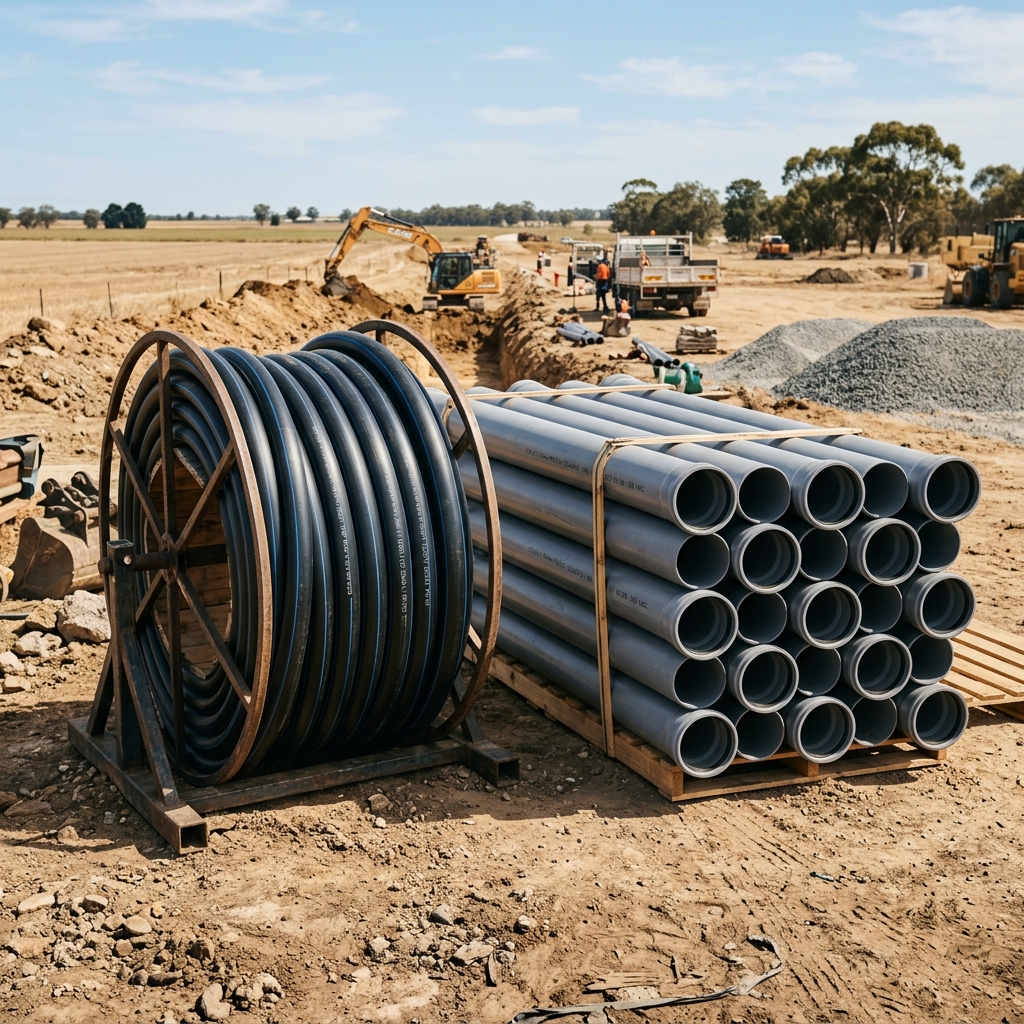
Choosing the best pipe for water supply and municipal infrastructure projects is a critical decision for project engineers and contractors in India. Two of the most widely used synthetic piping materials are High-Density Polyethylene (HDPE) and Polyvinyl Chloride (PVC).
While both are lightweight, corrosion-free, and highly durable compared to traditional metal pipelines, they exhibit distinct physical characteristics, jointing methods, and cost configurations. At HS Infraproc, we supply certified HDPE Pipes & Fittings as well as high-performance uPVC Pipes across India. This guide compares HDPE vs PVC pipes to help you make an informed decision for your next project.
Understanding the Materials
Before diving into a direct comparison, let us understand what makes these two materials unique.
1. Polyvinyl Chloride (PVC/uPVC)
PVC is a rigid, strong, and highly cost-effective plastic polymer. For water supply and drainage applications, unplasticized PVC (uPVC) is used because it does not contain plasticizers, maintaining stiffness and structural strength. Typical PVC pipe applications include agricultural irrigation, rural water distribution networks, urban drainage, and domestic plumbing.
2. High-Density Polyethylene (HDPE)
HDPE is a flexible thermoplastic polymer made from petroleum. It is known for its high strength-to-density ratio, flexibility, and impact resistance. One of the major HDPE pipe benefits is that it can be bent and routed around curves, reducing the need for directional elbows and fittings. It is widely used in high-pressure municipal water lines, city gas distribution, underground sewer lines, and trenchless piping.
HDPE vs PVC Pipes: Head-to-Head Comparison
Jointing and Leak Proofing
PVC pipes are typically joined using solvent cement or rubber ring gaskets. HDPE pipelines are joined using thermal heat fusion (butt fusion or electrofusion) which melts the material together, creating a monolithic, 100% leak-proof joint.
Flexibility and Bending
PVC is a rigid material with minimal flexibility, which requires excavation in straight lines and multiple fittings. HDPE is highly flexible and can absorb ground shifts, seismic activities, and water hammer surges easily.
Cost Analysis
PVC pipes generally have a lower initial material cost than HDPE. However, HDPE's low installation labor, reduced fittings, and minimal maintenance can result in lower life-cycle cost for large infrastructure projects.
Durability and Surge Resistance
HDPE has a higher impact strength and resistance to external loads and environmental stress cracking. While PVC performs exceptionally under static pressure, HDPE handles dynamic shock pressures much better.
Which is the Best Pipe for Water Supply?
The answer depends heavily on the installation method and the nature of the project.
- Choose PVC if: The project demands a cost-effective, straight-line piping system for gravity flow or moderate-pressure distribution. It is highly suitable for open field agriculture, household plumbing, and low-budget rural drinking water schemes.
- Choose HDPE if: The pipeline is to be installed in shifting, rocky, or uneven terrains, or requires trenchless drilling (HDD). It is also the ideal choice for high-pressure municipal water mains, sewage effluent transmission, industrial chemical transport, and submarine lines.
Why Source from HS Infraproc?
At About HS Infraproc, we ensure that both our thermoplastic ranges adhere strictly to Bureau of Indian Standards (BIS) parameters. Our HDPE pipes conform to IS 4984, and our PVC range is manufactured in accordance with IS 4985. We offer complete testing certifications, dimensional consistency, and matched fittings to guarantee zero mismatch at your site.
Still confused about which material to select for your infrastructure or water supply tender? Request a Quote or connect with our engineering support team for detailed catalogs, pressure class suggestions, and customized pricing.